You've Never Lived There, But It Calls You By Name
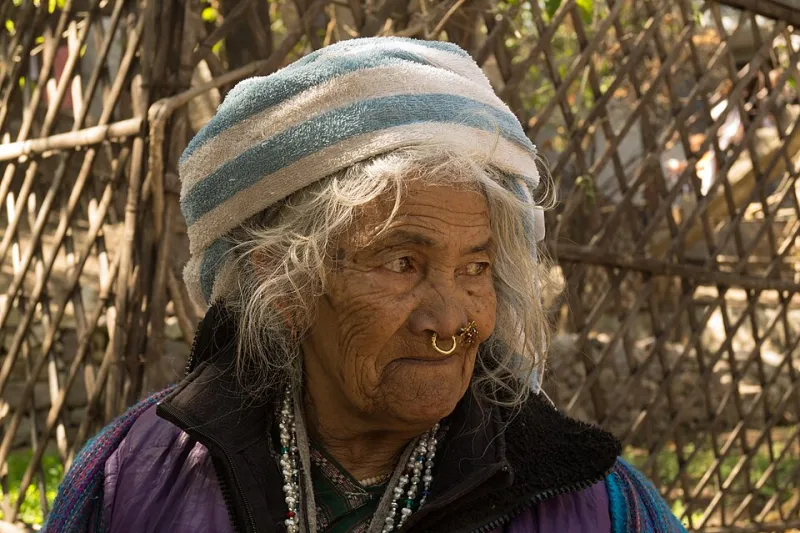
Photo: Satdeep Gill, CC BY-SA 4.0, via Wikimedia Commons
Marcela grew up in suburban Phoenix, surrounded by strip malls and saguaro cacti. Her grandparents came from Oaxaca, Mexico, but she'd never been. Still, every time she heard cumbia drift from a neighbor's window or caught the smell of copal smoke at a local festival, something inside her moved — like a compass needle swinging toward true north.
"I used to feel guilty about it," she says. "Like I was romanticizing a place I had no right to claim. But the pull was so real it almost hurt."
Marcela isn't alone. Across the US, millions of people carry a quiet, persistent longing for places they've never called home — countries their parents or grandparents left behind, cities glimpsed in films, landscapes described in half-remembered bedtime stories. Psychologists have a term for it: place identity. The rest of us just call it a feeling we can't shake.
When Geography Gets Into Your Blood
The idea that we can belong somewhere we've never lived seems counterintuitive. Home, after all, is supposed to be earned through presence — through knowing which floorboard creaks, which neighbor leaves their porch light on, which street smells like rain before anyone else notices the clouds.
But belonging, it turns out, is far more complicated than proximity.
Researchers who study diaspora communities and what sociologists call "third-culture individuals" — people raised between cultures, never fully at home in any single one — have found that emotional attachment to a place can form through channels that have nothing to do with physical experience. Ancestry activates it. Storytelling sustains it. And the imagination, given even the smallest opening, runs with it.
Dr. Priya Mehta, a cultural psychologist based in Chicago who studies immigrant identity, explains it this way: "When families migrate, they carry their homeland with them in language, food, ritual, and memory. Children absorb all of that. The place becomes emotionally real to them even if they've never touched its soil."
For many second- and third-generation Americans, this inherited emotional landscape is as vivid as anything they've actually experienced. They know the recipes. They know the saints' days. They know the particular slant of light their grandmother described when she talked about home. The place exists in them, fully formed, waiting.
The Role of Media — and Myth
Of course, it's not only ancestry that does this. Media has always been one of the most powerful architects of imagined belonging.
Think about how many Americans fell in love with Ireland through Once or Brooklyn, or discovered a bone-deep affection for Japan through Studio Ghibli films long before they ever booked a flight to Tokyo. Think about the wave of people who watched Crash Landing on You and suddenly felt an inexplicable tenderness toward South Korea — its landscapes, its food stalls, its particular emotional register.
Jamie, a 28-year-old teacher from Atlanta with no Korean heritage whatsoever, laughs when she describes her K-drama spiral. "I know it sounds ridiculous. But I started learning Hangul at 2 a.m. on a Tuesday and I genuinely felt like I was coming home to something."
She visited Seoul last spring. "It was nothing like the dramas and also exactly like them," she says. "But the feeling I had walking around — that sense of recognition — it was completely real."
This is the strange alchemy of cultural longing: the myth and the reality don't cancel each other out. They coexist, and the emotional truth of the feeling doesn't diminish just because its origins are partly fictional.
Third-Culture Kids and the Geography of the In-Between
For people who grew up moving — military families, diplomatic kids, children of international workers — the longing for place takes a different but equally powerful shape. Without a single fixed hometown, they often develop what researchers describe as a "portable sense of belonging," one that can attach itself almost anywhere.
These are the people who visit a city for the first time and feel, within hours, that they could stay forever. Who arrive in a country where they don't speak the language and somehow feel more themselves than they do back in their official hometown.
Kevin, who grew up between Manila, Dubai, and Los Angeles, describes it as having a heart with multiple addresses. "I don't have one place that's mine. I have pockets of belonging scattered across the map. And honestly? I've stopped fighting it. It's just who I am."
There's something quietly revolutionary in that acceptance. In a culture that still tends to ask "where are you really from?" as though the answer should be simple and singular, the idea that you might belong to several places — or to a place you've never lived — challenges the whole premise of the question.
Making the Leap
Some people don't just carry the longing. They follow it.
Every year, a quiet stream of Americans makes what might seem like an irrational move: relocating to a country they have ancestral ties to but no lived experience of, or simply somewhere that has called to them from across an ocean. The Irish diaspora has a word for the Irish-Americans who return: they call them "blow-ins." Japan has communities of foreigners who arrived on the wings of a feeling and simply never left.
Marcela finally made it to Oaxaca at 31. She spent three months there on a sabbatical, learning to make mole from a woman who reminded her of her grandmother, getting lost in the zócalo, crying in the market for reasons she still can't fully explain.
"It wasn't a homecoming in the traditional sense," she says. "I was clearly an outsider in a hundred ways. But there was something underneath all of that — some frequency the place was broadcasting that I'd been tuned to my whole life without knowing it."
She's going back next year. Longer this time.
What This Tells Us About Identity
The longing for a place you've never lived isn't escapism, and it isn't delusion. At its core, it's a form of self-knowledge — an intuition about who you are that geography helps you name.
In a world where identity is increasingly fluid and borders feel both more rigid and more arbitrary than ever, the idea that belonging can be felt before it's lived is, in its own way, hopeful. It suggests that home isn't only where you've been. It's also where some part of you has always been pointing.
Maybe the places that call to us are less about geography and more about recognition — the recognition of something in ourselves that we haven't yet had the space, or the courage, or the right moment to become.
Sometimes the pull is the point. And sometimes, if you're lucky, you follow it all the way there.