How Strangers in Strange Places Become the People Who Know You Best
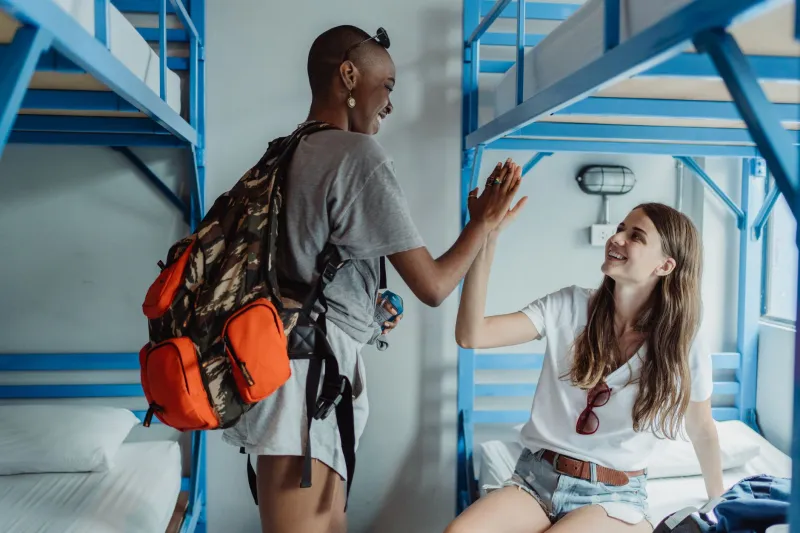
There's a particular kind of magic that happens around 11 p.m. in a six-bed hostel dorm somewhere you've never been before. Someone pulls out a bag of chips. Someone else produces a warm beer from a backpack. And suddenly, five people who didn't know each other's names four hours ago are trading stories about heartbreak, hometowns, and the dreams they haven't told anyone else about.
If you've traveled solo — even once — you probably know this feeling. It's not nostalgia exactly. It's more like recognition. Like meeting a version of yourself you didn't know existed.
The Rules Are Different When You're Far From Home
Back in your regular life, friendships tend to build slowly. There are coworkers you've known for three years who you still wouldn't call close. There are neighbors you wave at but never really talk to. Social distance — the invisible scaffolding of norms and roles we navigate every day — keeps a lot of people at arm's length.
But travel collapses that scaffolding almost immediately.
Psychologists have a term for it: psychological safety through anonymity. When you're in a place where no one knows your job title, your relationship history, or the version of you that shows up to Thanksgiving dinner, you feel freer to be honest. The usual stakes feel lower. And paradoxically, that's when real intimacy tends to happen fastest.
Add to that the shared vulnerability of being somewhere unfamiliar — navigating a foreign transit system, fumbling through a language barrier, figuring out if that street food is safe to eat — and you've got the perfect conditions for human bonding. Shared uncertainty, it turns out, is one of the fastest routes to genuine connection.
Why Travel Friendships Hit Different
Ask anyone who's done a long backpacking trip through Southeast Asia, or spent a summer abroad in Europe, or relocated to a new country for work, and they'll usually say the same thing: some of the closest friendships they've ever had started with a stranger in a foreign place.
There's a reason for that beyond just circumstance. Travel friendships are forged in what researchers sometimes call compressed time — a short period where you're together constantly, experiencing intense or novel things, with none of the ordinary distractions of home life pulling your attention elsewhere. You're present. Fully, almost unavoidably present.
Think about it: when was the last time you spent an entire day with a friend back home, phones down, doing nothing but wandering and talking? For most of us, that's rare. On the road, it's Tuesday.
That compression does something to a relationship. It fast-tracks trust. It shortcuts small talk. You end up knowing someone's actual fears and favorite memories before you even know their last name.
The Expat Experience: Finding Your People in Someone Else's City
For people who move abroad — whether for work, love, or just a gut feeling — the process of finding community in an adopted city is its own kind of adventure. And it rarely looks like what you'd expect.
Expats often describe a pattern: the first few months are disorienting, even lonely. Then, slowly, the city starts to offer you people. A colleague who insists on showing you the right place to get coffee. A neighbor who teaches you an untranslatable word that suddenly explains everything about the local culture. A language exchange partner who becomes someone you'd call in a crisis.
These relationships carry a particular weight because they're built without the shared history that usually anchors friendship. There's no "we grew up together" or "we went to the same school." What you have instead is now — this city, this chapter, this version of yourselves that only exists in this specific place and time.
And sometimes, that's exactly enough.
What These Bonds Reveal About All of Us
There's something worth sitting with here, something that goes beyond travel tips or friendship advice.
The fact that humans can meet across language gaps, cultural gaps, and wildly different life experiences — and still find each other, still recognize something familiar in a stranger's face — says something profound about what we actually are underneath all the context we carry around.
We talk a lot in the US about division. About how hard it is to connect across difference, how polarized everything feels, how hard it is to find common ground. And those things are real. But travel — real travel, the kind where you're genuinely out of your comfort zone — has a way of quietly dismantling the idea that difference is the default barrier.
Because the backpacker from Brazil and the teacher from Ohio and the retiree from South Korea sitting around that hostel common room table? They're laughing at the same thing. They're worried about the same things. They're lonely in the same ways and hopeful in the same ways.
Mahal kita — it means "I love you" in Filipino, but it carries something bigger than a simple declaration. It holds warmth, closeness, a kind of affection that doesn't need much explanation. It's the feeling you get when someone across the world makes you feel like you belong right where you are.
Travel has a way of teaching you that feeling doesn't require a shared passport or a shared language. It just requires showing up.
The Friendships That Outlast the Trip
Not every travel connection lasts, and that's okay. Some people are meant to walk with you for a week in Lisbon, not a lifetime. There's beauty in that too — the friendship that exists perfectly within its own small window of time.
But plenty of them do last. The group chat that's been active for six years since that Thailand trip. The friend from Copenhagen you see every time one of you crosses the Atlantic. The woman from your language class in Mexico City who flew in for your wedding.
What keeps those friendships alive isn't proximity. It's the fact that they were built on something real — on the version of you that showed up when the familiar scaffolding fell away. Those friends knew you when you were a little lost, a little brave, a little more yourself than usual.
That's not nothing. That's actually everything.
The world is full of people who could become your people. Sometimes all it takes is ending up in the same unfamiliar place at the same time — and being willing to share the chips.