You're Everywhere and Nowhere: The Hidden Loneliness of Being a Connected Soul
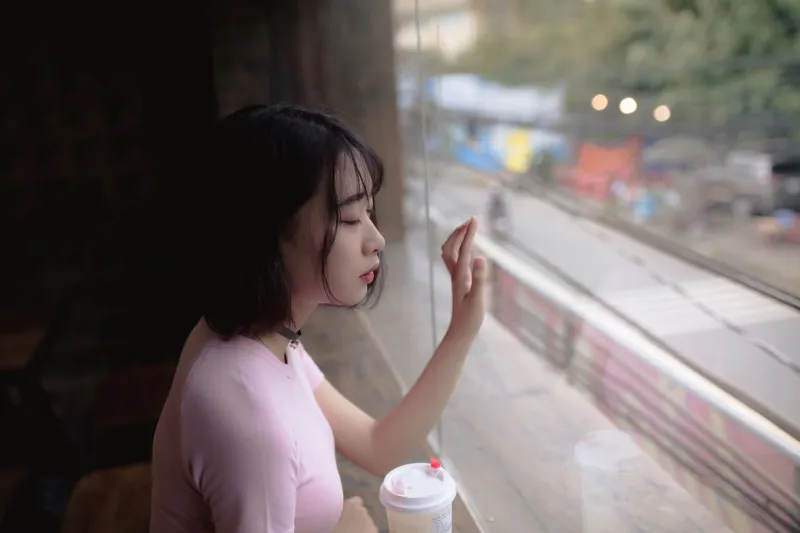
The World Is at Your Fingertips. So Why Do You Feel So Alone?
Imagine this: You're sitting in a café in Lisbon, your laptop open, your Instagram feed full of friends from six different countries, a WhatsApp group chat pinging every few minutes. You've lived on three continents. You speak two languages. You have followers, connections, and a passport full of stamps.
And yet — something feels hollow.
This isn't a rare experience. In fact, it's becoming one of the defining emotional contradictions of our era. Researchers, therapists, and people who've built genuinely global lives are all circling the same uncomfortable truth: access to the world doesn't automatically give you a place in it.
We call it the loneliness paradox. And it's more common than most of us want to admit.
More Connected, More Isolated — The Data Doesn't Lie
The U.S. Surgeon General made headlines in 2023 when he declared loneliness a public health epidemic. This wasn't a niche concern. According to a Cigna study, more than half of Americans report feeling lonely on a regular basis — and younger generations, the very people who grew up with social media and global access, report the highest rates.
Meanwhile, the number of Americans living abroad has grown steadily. Digital nomadism exploded after 2020. Online communities connect people across every conceivable interest, culture, and timezone. The infrastructure for connection has never been more sophisticated.
So what's going wrong?
Psychologists point to a distinction that often gets lost in the noise: the difference between contact and connection. You can have enormous amounts of the first — messages, meetups, cultural exchanges, shared experiences — while still starving for the second. Real connection, the kind that makes you feel genuinely known, requires vulnerability, consistency, and a certain kind of emotional risk that no app or airplane ticket can manufacture.
The Expat and Digital Nomad Experience: Beautiful and Brutal
Ask anyone who's spent years living internationally, and you'll hear a version of the same story. There's an early phase — exhilarating, eye-opening, full of the high of novelty. New food, new language patterns, new ways of seeing the world. That phase is real and wonderful.
But then comes the quiet.
Jamie, a 34-year-old graphic designer from Chicago who spent four years bouncing between Bali, Mexico City, and Barcelona, describes it this way: "I had the most interesting life on paper. But I'd go weeks without a single conversation that felt real. Everyone I met was either passing through or had their own established life I couldn't quite break into. I was a tourist in every room I walked into."
This experience has a name in expat communities: chronic shallowness. It's the accumulation of dozens of surface-level encounters — great conversations with strangers at hostels, warm but temporary friendships with locals, video calls with people back home who no longer quite understand your life. None of it bad, exactly. Just... thin.
The irony is that exposure to multiple cultures can actually deepen the isolation. When you've lived between worlds, you often don't feel fully at home in any of them. You become fluent in many places and native to none.
Why Cultural Exposure Alone Isn't Enough
There's a beautiful idea baked into the premise of global travel and connection — that if we just see more of the world, understand more cultures, meet more kinds of people, we'll feel more whole. And there's truth in it. Cultural exposure genuinely does expand empathy and perspective.
But belonging isn't the same as understanding.
Dr. Vivek Murthy, in his work on loneliness, emphasizes that what humans need most isn't novelty or even community in the broad sense — it's mutuality. The feeling that someone else is invested in your interior life. That they'd notice if you disappeared. That the relationship has weight and history.
Those things take time. They require staying. And in a culture that celebrates movement, reinvention, and the next destination, staying can feel almost countercultural.
Many cultures around the world actually have built-in structures that protect against this kind of drift. In Filipino culture, the concept of bayanihan — a communal spirit of helping and belonging — creates webs of mutual obligation and care that are woven into daily life, not something you opt into. In Japanese culture, moai — lifelong social support groups — offer a kind of structured, durable closeness that Americans often lack entirely.
These aren't just charming cultural quirks. They're functional answers to a human need that our hyper-individualist, constantly-mobile lifestyle often fails to meet.
The Social Media Layer Makes It Weirder
There's another dimension worth naming: the performance of connection.
For many globally connected people, social media creates a peculiar loop. You post the café in Lisbon. You get 200 likes. People comment that your life looks amazing. And in some technical sense, you've just "connected" with 200 people. But none of them know you cried on the walk home, or that you've been eating dinner alone for two weeks, or that you can't remember the last time someone asked how you were doing and actually waited for the answer.
The performance of a rich, global life can become its own kind of cage — one where admitting loneliness feels like a betrayal of the story you've been telling.
Finding the Real Thing: What Actually Helps
None of this is an argument against travel, global community, or building a life that crosses borders. Those things are genuinely enriching. The point is to go in clear-eyed about what they can and can't give you.
Therapists who work with expats and digital nomads often point to a few practices that actually move the needle:
Invest in depth over breadth. It's more nourishing to have two or three relationships where you're truly known than twenty where you're merely liked.
Let yourself be a beginner somewhere. Joining a local class, a community garden, a regular pickup basketball game — recurring, low-stakes environments where you see the same people over time — is one of the most reliable ways to build genuine closeness, wherever in the world you are.
Name the loneliness out loud. This sounds simple, but it's radical. Vulnerability is the actual bridge between contact and connection. Saying "I've been feeling really isolated lately" to someone you trust is more connective than a hundred shared travel photos.
Stop treating your home base as temporary. Even if you move frequently, committing mentally to a place — learning its rhythms, investing in its community — changes how you show up and how others receive you.
You Can Love the World and Still Need a Home in It
At Mahal Kita, we believe that loving the world — genuinely, deeply — means more than collecting experiences. It means being willing to be changed by places and people. It means letting yourself need someone. It means understanding that mahal kita, at its heart, is an act of presence.
The world is endlessly beautiful and worth exploring. But it's also full of people sitting in beautiful places, feeling unseen.
You're not broken for feeling that way. You're just human — and human beings need more than access. We need to actually arrive somewhere, and let someone know we're there.