One Whiff and You're Somewhere Else: The Mysterious Power of Scent Memory Across Cultures
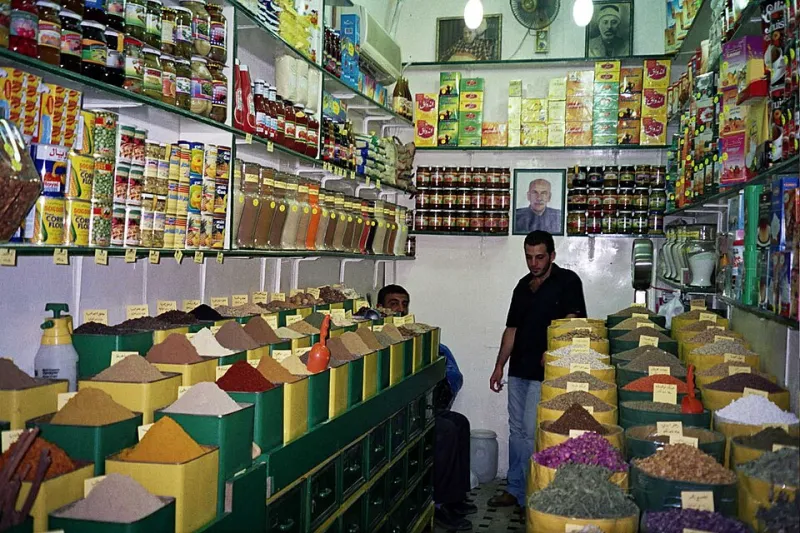
Photo: upyernoz, CC BY 2.0, via Wikimedia Commons
It happens fast. You're waiting in line at a coffee shop in Chicago, or maybe you're walking through a weekend farmers market in Portland, and then — without warning — something in the air stops you cold. A drift of cardamom. The char of roasting chiles. The particular sweetness of jasmine oil on warm skin. And for just a second, you are somewhere else entirely. Somewhere you may have never even been.
That feeling isn't a glitch. It's your brain doing something genuinely extraordinary.
The Shortest Distance Between Two Worlds
Of all five senses, smell is the only one that takes a direct neural shortcut to the parts of your brain responsible for emotion and memory — specifically, the amygdala and hippocampus. Every other sense routes through the thalamus first, like going through customs before you enter a country. But scent? It walks straight through.
This is why a smell can hit you emotionally before you've even consciously identified what it is. The feeling arrives first. The recognition comes second. Scientists call this phenomenon the Proustian memory effect, named after the French novelist Marcel Proust, who famously described being flooded with childhood memories after tasting a madeleine dipped in tea. But researchers have since shown the effect is even more dramatic with smell than with taste — more vivid, more emotionally intense, and often more surprising.
Here's what makes it culturally fascinating: those smell-memory connections aren't entirely personal. Many of them are shared.
Why You Recognize a Place You've Never Been
Imagine you grew up in suburban Ohio. You've never been to South Asia. But you walk into an Indian grocery store in your city and something about the combination of dried fenugreek, mustard seed, and turmeric feels — inexplicably — like recognition. Not nostalgia exactly. Something closer to a door opening in your chest.
Part of this is cultural exposure, of course. If you've had Indian food, watched Bollywood films, or even just had neighbors who cooked with those spices, your brain has quietly been filing those scents away. But researchers have also found that certain olfactory responses appear to be more universal than we'd expect — that humans across wildly different cultures share some baseline emotional reactions to specific smells, particularly those tied to food, nature, and human bodies.
A 2018 study published in Current Biology found surprising cross-cultural agreement on which smells were considered pleasant or unpleasant, even among isolated indigenous communities in Ecuador and urban populations in the U.S. and Europe. The researchers concluded that some scent preferences may be rooted in human biology rather than cultural conditioning — which means smell is both deeply personal and deeply universal at the same time.
That's a rare and remarkable thing.
The Spice Market in Your Imagination
There's a reason travel writers always describe markets by their smell first. The saffron and dried roses of the Grand Bazaar in Istanbul. The fish sauce and lemongrass haze of a Bangkok street food alley. The sun-warmed eucalyptus of an Australian bushwalk. These aren't just atmospheric details — they're the sensory anchors that make a place feel real in memory long after photographs have faded into generic scenery.
For people who've never traveled to those places, those same smells — encountered in a restaurant, a specialty shop, or a neighbor's apartment hallway — can create something that functions almost like a borrowed memory. You haven't been to Marrakech, but you've smelled ras el hanout, and now there's a version of Marrakech that lives inside you, fuzzy and impressionistic but emotionally genuine.
This is one of the quieter ways cultures travel. Not through news or social media or even music — but through the completely unguarded act of someone cooking dinner with their windows open.
The Immigrant Kitchen and the American Nose
In a country as diverse as the United States, this kind of olfactory cultural cross-pollination happens constantly. And it's not always comfortable, which is worth acknowledging.
For generations, immigrant families in American cities have faced criticism — sometimes cruel, sometimes codified into actual housing rules — for the smells of their cooking. Korean doenjang jjigae, Ethiopian injera with berbere, Jamaican curry goat: foods that are deeply loved and deeply meaningful to the people who make them have also been treated, by others, as something foreign and unwelcome.
And yet. Something shifts over time. The smells that once marked a community as other eventually become part of the shared sensory landscape of a neighborhood, a city, a country. Today, the smell of fish sauce in a New Orleans kitchen is just Tuesday. The scent of cumin in a Denver apartment complex is background music. Smells that once divided people quietly, gradually, become the smells of home — not just for the families who brought them, but for the neighbors who grew up breathing them in.
That's not nothing. That's actually a lot.
What It Means to Belong to a Smell
Ask people to describe the scent of home and the answers are strikingly specific. It's almost never abstract. It's my grandmother's menthol cream and the cedar lining of her closet. It's the particular mildew of the basement where I learned to read. It's the chlorine smell of the public pool where I had my first kiss.
But sometimes — and this is where it gets really interesting — people describe smells that belong to other people's homes as the smell of their home. A kid who grew up spending every afternoon at a Puerto Rican friend's house might carry the smell of sofrito as one of their deepest comfort scents. A person who was raised by a grandmother who wore patchouli might feel an instant, bone-deep calm every time they pass someone wearing it, regardless of whether they consciously remember why.
We absorb each other. Through smell, more than we realize, we carry pieces of each other's lives inside us.
The Scent You Haven't Met Yet
There's something quietly hopeful about all of this. In a world that often feels fractured along every possible line — political, cultural, linguistic — smell operates outside those divisions. It doesn't ask for your opinion before it moves you. It doesn't care whether you agree with someone's politics before it lets their grandmother's cooking make you feel at home.
Maybe that's why travel, at its best, is so transformative. It's not just what you see or learn. It's what you breathe in. The smells of a place you've never been can rewire something in you — quietly, permanently — so that afterward, a little piece of that world belongs to you, and a little piece of you belongs to it.
Somewhere right now, someone is cooking something you've never tasted, in a city you've never visited, using spices you can't yet name. And one day — in a hallway, on a street corner, in an airport — you're going to walk through the ghost of that smell, and something in you is going to say: I know this.
You won't be wrong.