You've Never Been There, But You Already Know It: The Strange Magic of Places That Feel Like Yours
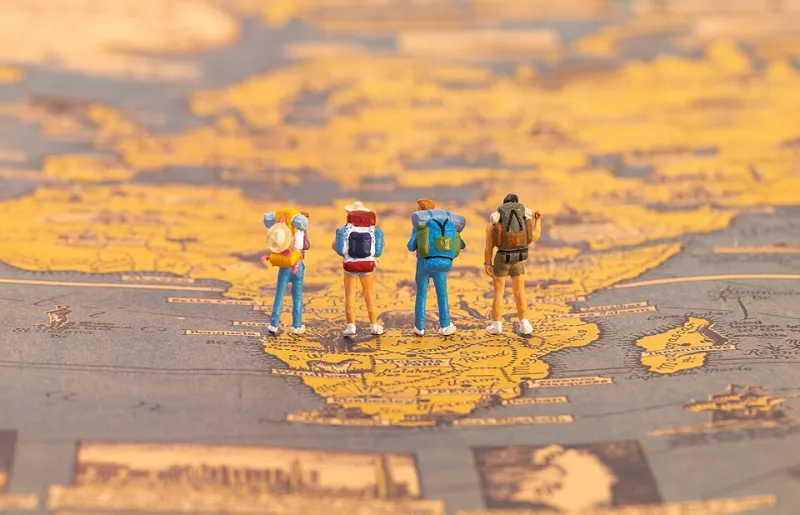
Photo: Jernej Furman from Slovenia, CC BY 2.0, via Wikimedia Commons
You step off a plane, or round a corner in a city you've never visited, and something hits you. Not culture shock. Not wonder, exactly. Something quieter and stranger than both — a kind of recognition. Like your body got there before your brain did.
Maybe it was the first time you walked through a market in Oaxaca and felt oddly at ease among strangers. Or the moment you saw the Scottish Highlands in a photo and felt a pull you couldn't explain. Or the afternoon you drove through the Louisiana bayou and thought, inexplicably, I could stay here.
Psychologists have a few names for this. Travelers call it by a dozen more. But whatever you call it, the experience of a place feeling like home before you've earned the right to call it that is one of the most quietly profound things that can happen to a person.
When Arrival Feels Like Return
There's a concept in environmental psychology called place attachment — the emotional bond people form with specific locations. Researchers have long studied how we develop these bonds over time, through repeated exposure and lived experience. But what happens when the attachment shows up before the experience? When you feel it on day one, hour one, minute one?
Some researchers point to what's called environmental fit — the idea that certain landscapes, urban textures, or sensory environments resonate with our nervous systems in ways that feel deeply personal. The pace of a city's foot traffic. The color of the light in the afternoon. The way sound bounces off stone walls. These aren't just aesthetic preferences. They can tap into something physiological, something your body registers before your conscious mind catches up.
For people whose families have migrated across generations, this phenomenon takes on an even more layered meaning. A third-generation Filipino American who's never left the US might visit the Philippines and feel, inexplicably, like the air makes more sense there. A Black American descendant of the Great Migration might walk through a neighborhood in Georgia and feel a grief they can't fully name — and a belonging they weren't expecting.
Ancestry as a Kind of Inner Map
There's growing interest in what some researchers call ancestral memory or epigenetic inheritance — the idea that trauma, longing, and even sensory experience can be passed down through generations in ways that shape our psychology and even our biology. It's still a contested area of science, but anecdotally? Ask anyone who's ever traveled to a country their grandparents fled and felt something crack open inside them. The stories are everywhere.
Jamila, a 34-year-old from Atlanta whose family came from the Caribbean two generations ago, describes her first trip to Jamaica this way: "I cried at the airport. Not from sadness — I didn't even understand it at the time. It was like something in me exhaled that I didn't know had been holding its breath."
That exhale. So many people describe it exactly that way.
It's not nostalgia in the traditional sense, because you can't be nostalgic for something you've never personally experienced. But maybe it's something inherited — a longing passed down like a recipe or a nickname, folded into who you are before you ever had a say in the matter.
The Stories We Absorb Without Realizing It
Cultural inheritance isn't just biological. It's narrative. The stories your grandmother told about her village. The way your parents described the smell of rain back home. The music your family played on Sunday mornings that came from somewhere else entirely. These stories build an inner landscape — a geography of the imagination — that can make a real place feel like it's been waiting for you.
For a lot of Americans, this is complicated by history. Displacement, diaspora, and distance mean that "home" is often a place that exists more in story than in lived experience. And yet those stories are doing something. They're constructing a sense of place that sits right alongside our actual, physical sense of where we live.
This is part of why immigrant communities in the US so often recreate pieces of their homelands in their new neighborhoods. Little Havana in Miami. Koreatown in LA. The Vietnamese enclaves of Houston. These aren't just practical communities — they're acts of cartography. Ways of saying: here is where home lives now, and it still looks like something.
What the Body Knows First
Travel writers have been circling this idea for decades without quite naming it. Bruce Chatwin wrote about the nomadic impulse — the idea that humans are wired to recognize certain landscapes as theirs regardless of where they were born. Rebecca Solnit has written beautifully about how we carry our histories in our bodies as we move through space.
And then there's the more mystical framing, which plenty of people lean into without apology. Past lives. Soul contracts. Spiritual homecoming. Whether or not you go there, the emotional reality is the same: some places hit different, and the rational explanations only get you so far.
What's interesting is that this feeling isn't always tied to ancestry or cultural heritage. Sometimes it's purely environmental. A person from suburban Ohio might arrive in Iceland and feel something unlock. A city kid might stand in the middle of a Wyoming plain and feel, for the first time, completely themselves. The landscape mirrors something internal — some emotional or psychological terrain they've been carrying around without a name for it.
Learning to Trust the Pull
Here's what all of this points to: belonging isn't only built. Sometimes it's recognized.
In a world that often tells us home is where you're from — where you were born, where your papers say you live — there's something quietly radical about the idea that home might also be where your nervous system sighs. Where something in you, shaped by story and memory and maybe something older than both, says yes, this, here.
That doesn't mean you pack up and move every time a place gives you a feeling. But it might mean paying attention to those moments more carefully. Asking what they're telling you about who you are and where you come from. Letting yourself be a little undone by a city or a coastline or a neighborhood that shouldn't mean anything to you — but somehow, inexplicably, means everything.
Mahal kita, after all, is a phrase that crosses language. Love — for people, for places, for the version of yourself you find when you're somewhere that finally fits.
Some places love you back before you even introduce yourself. And that's worth following.