Where You Are When You Lose Someone Changes Everything About How You Grieve
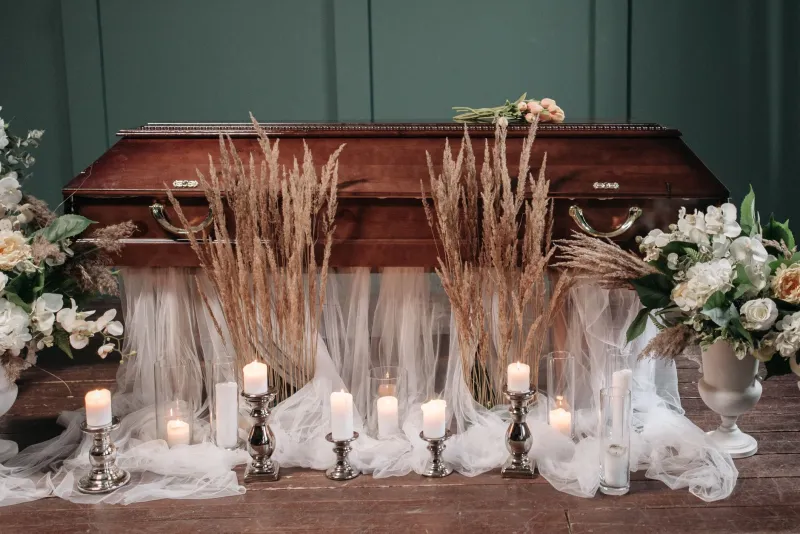
There's a particular kind of silence that settles over a house after someone dies in it. It's different from any other quiet. The rooms feel both too full and completely empty. If you've ever experienced that, you already know — on some bone-deep level — that grief isn't just an emotion. It's a place.
Where you are in the world when loss finds you shapes nearly everything about how you move through it. The rituals your community offers you, the architecture that surrounds you, even the season and the light coming through the window — all of it becomes part of the texture of your mourning. And yet, we almost never talk about it that way.
The Rituals That Hold You Up (or Don't)
In the Philippines, a lamay — a wake that can last several days — fills a home with neighbors, relatives, card games, and laughter alongside the tears. The idea isn't to suppress grief but to refuse to let the grieving person sit alone inside it. Community becomes a physical container for pain. In Mexico, Día de los Muertos transforms mourning into a kind of homecoming, with altars stacked with marigolds, photographs, and the deceased's favorite foods. Death is invited back to the table rather than shut behind a door.
In Japan, the rituals are precise and choreographed — the careful washing of the body, the specific order of the funeral rites — and that precision serves a purpose. It gives the grieving mind something to do, a structure to move through when everything else feels like it's falling apart.
Compare that to the dominant American experience of grief: a two-day viewing, a funeral service, maybe a reception afterward, and then — an expectation, often unspoken but very real, that you'll be functional again within a week. Bereavement leave in most U.S. workplaces is three to five days. Three to five days to absorb the permanent absence of someone you loved.
The difference in these cultural containers isn't just symbolic. It's neurological.
What Your Brain Does With the Geography of Loss
Neuroscientists who study grief have found that bereavement activates many of the same brain regions involved in physical pain and addiction. The brain, in a very literal sense, goes searching for the person who is gone — scanning familiar environments, expecting them to appear in the places they always occupied. This is why walking into a parent's kitchen after they've died can feel like being hit by a truck. The brain predicted them there. Their absence registers as a kind of error.
This is also why where you grieve matters so much. If you're mourning someone in the city where they lived, surrounded by the restaurants they loved and the streets they walked, your brain gets a near-constant stream of environmental cues triggering that search-and-not-find loop. It's exhausting and heartbreaking, but it's also part of how the brain slowly, reluctantly rewrites its predictions.
If you're grieving from far away — say, you're a first-generation immigrant in Chicago who just lost your mother in Manila — the process looks completely different. The environmental cues aren't there. The grief can feel strangely suspended, almost unreal, because nothing in your immediate surroundings confirms that anything has changed. And then something small — a specific brand of soap, a song on the radio, the smell of rice cooking — detonates the whole thing at once.
Neither way is easier. They're just different kinds of hard.
Going Back: The Childhood Home as Emotional Time Machine
For many people, the most disorienting version of grief happens when they return to a childhood home after a loss. Psychologists call this phenomenon "place memory" — the way physical spaces encode our emotional histories so completely that stepping back into them can collapse decades in an instant.
You walk into the house you grew up in and you are simultaneously forty-three years old and eight years old, and the person who is gone is somehow both absent and everywhere. Their handwriting is still on the label of a spice jar. Their coat is still on the hook by the door. The grief that hits you there is layered in a way that urban grief, grief in a neutral space, simply isn't.
In cultures where the family home is a multigenerational anchor — where grandparents live and die in the same rooms where they raised their children — this layering is understood and even honored. In the U.S., where mobility is built into the cultural DNA and it's normal for families to be scattered across multiple states, many people grieve in places that hold no memory of the person they've lost. It creates a different kind of loneliness: the loneliness of mourning someone in a space that never knew them.
Climate, Light, and the Weight of Seasons
There's a reason the Irish wake exists in a country where the sky is often the color of a bruise. Dark, wet, close-together climates have historically pushed cultures toward communal indoor mourning practices. The outside world offers no comfort, so the inside world has to.
In contrast, cultures from sunnier, more temperate climates — parts of West Africa, the Caribbean, New Orleans with its jazz funerals — have developed grief rituals that move outward, into the streets, into music, into collective celebration of a life. The sun doesn't make the loss smaller. But it changes the emotional register in which it's processed.
Research on seasonal affective disorder has long established that light directly influences serotonin and melatonin levels, which regulate mood. It's not a stretch to suggest that grieving in a cold, dark January in Minneapolis feels chemically different from grieving in the warmth of a Hawaiian summer. The body is part of the grief. The climate is part of the body.
What We Can Borrow From Each Other
One of the quieter gifts of living in a multicultural country like the United States is that we have access to grief traditions that our own dominant culture doesn't always offer. The Filipino American family down the street who keeps the lights on all night during a wake. The Mexican American colleague who builds an ofrenda in November. The South Asian neighbor whose community floods the house with food and presence for days on end.
These aren't just beautiful customs to admire from a distance. They're technologies of survival — ways that human beings across centuries and continents have figured out how to hold each other through the unsurvivable.
Grief, ultimately, is love with nowhere to go. And the world — in all its messy, diverse, heartbreaking fullness — has been working for thousands of years on the question of where to put it. We could all stand to learn from more than one answer.
Maybe that's what it means to really love the world: to let it teach you how to lose things, too.