Every Mile Away Brought Me Closer to the Street I Grew Up On
There's a version of the travel story we all know by heart. Person feels stuck. Person books a flight. Person stands on some cobblestoned street in Lisbon or a rice terrace in the Philippines or a night market in Chiang Mai, and something cracks open inside them. They find themselves. Roll credits.
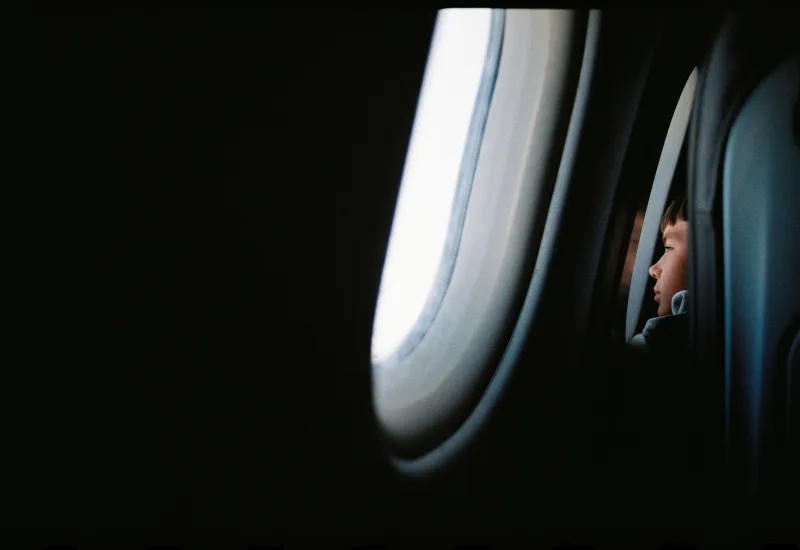
But here's the part that version conveniently leaves out: sometimes what cracks open isn't a new identity. Sometimes it's a window — and through it, for the first time in years, you can clearly see the place you left behind.
I didn't expect Rome to make me miss my mom's cooking. I didn't expect a hostel conversation in Buenos Aires to remind me of my high school best friend. And I definitely didn't expect to cry — genuinely, embarrassingly cry — when I heard a song on a Barcelona street corner that sounded just enough like something my grandmother used to hum in her kitchen in Ohio.
But that's exactly what happened. And if you've done any serious amount of traveling, there's a good chance you know exactly what I mean.
The Illusion of the Clean Slate
We talk about travel like it's an escape hatch. And honestly, it kind of is — at least at first. There's real freedom in being somewhere nobody knows your name, your history, or the version of you that still cringes at things you said in 2009. A new city lets you be whoever you want. That's intoxicating.
But here's what nobody tells you about clean slates: you're still the one holding the chalk.
Your habits follow you. Your sense of humor follows you. The way you instinctively reach for your phone when you're uncomfortable, or the foods you crave when you're tired, or the specific kind of quiet you need after a loud day — all of it packs itself neatly into your carry-on and shows up right alongside you at baggage claim.
And slowly, in between the wonder of new places, you start noticing which parts of you were shaped not by you, but by where you came from. The culture you absorbed before you even knew what culture meant. The rhythms of a specific neighborhood. The way people in your hometown make eye contact — or don't. The particular brand of kindness that existed on your block.
You don't notice any of it until you're somewhere that does it differently.
What 'I Love You' Sounds Like from Far Away
The phrase mahal kita — it means "I love you" in Filipino, and it's literally baked into the name of this site — carries something interesting in it beyond the translation. The word mahal also means "expensive" or "precious." To love something is to find it costly, worth everything. That duality hits differently when you're far from the people and places that shaped you.
When you're home, love is ambient. It's background noise. It's your dad leaving the porch light on, or your city's skyline at a specific hour, or the way a familiar diner smells on a Sunday morning. You don't call it love because you don't have to. It just is.
But distance has a way of putting a price tag on things. When you're standing somewhere beautiful and foreign and completely unmoored, you start doing the math on what you left behind. What it actually costs you to be away. What you'd give to sit in that diner again, or hear that voice, or walk down that street without consulting Google Maps.
That's when hometown love stops being ambient and starts being loud. Almost unbearably loud.
The Gift Nobody Puts on the Itinerary
Travelers love to talk about what they gained from their experiences abroad — perspective, empathy, flexibility, a higher tolerance for delayed flights. All of that is real. Cross-cultural connection genuinely does expand something in you. Sitting across a table from someone whose life looks nothing like yours and finding common ground anyway? That's one of the most quietly revolutionary things a human being can do.
But the gift that doesn't make it onto the travel blog highlights reel is this: the world shows you yourself in relief.
Like a silhouette only visible because of what's behind it, your identity becomes clearest when it's surrounded by contrast. You understand your own cultural defaults — the assumptions you didn't know you were making, the comforts you didn't know you depended on — only when something challenges them. And in that challenge, something unexpected happens. Instead of feeling embarrassed by your roots or eager to shed them, you start to feel something closer to tenderness.
Not blind loyalty. Not uncritical nostalgia. Just — tenderness. The kind you feel for something that made you who you are, flaws and all.
Coming Home Is Never the Same Twice
Here's the other side of the paradox: you can't actually go home again, not really. The place is never exactly as you left it. More importantly, you're not exactly as you left it. The version of you that returns has been recalibrated by every border crossed, every conversation had in broken language, every meal eaten alone at a table for two.
So what you come home to isn't the same home. It's something better — a home you can finally see.
You notice the architecture you walked past a thousand times without looking up. You taste the regional food with new appreciation, the way you'd taste something rare and specific somewhere else in the world. You listen differently to the people who've been there all along, because now you have context for how unusual and specific and genuinely theirs their way of being actually is.
Travelers like to say the world is smaller than you think. But I'd argue the opposite is also true: home is bigger than you think. It just takes leaving to find out.
The Question Worth Sitting With
Maybe the real reason we travel isn't to escape where we're from, but to earn the ability to love it honestly. Not out of obligation or inertia, but out of actual, eyes-open choice.
True global connection — the kind that goes beyond collecting passport stamps or Instagram locations — might begin exactly there. Not in the moment you arrive somewhere new, but in the moment you return somewhere old and realize, with something like shock, that you missed it. That it matters. That it's yours.
The world is worth every mile. But so is the street you grew up on.
Sometimes the greatest thing a faraway place can give you is the clearest possible view of home.