The Punchline Has a Passport: Notes on Laughter That Crosses Borders
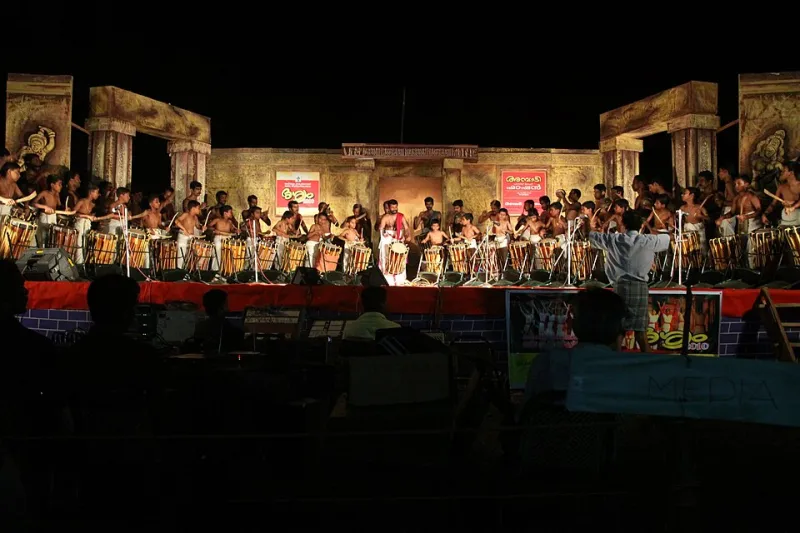
Photo: Baijukarayad, CC BY-SA 3.0, via Wikimedia Commons
There is a specific kind of silence that follows a joke told to the wrong room. Not hostile silence. Not bored silence. Just a polite, faintly puzzled pause while everyone waits to find out whether they were supposed to laugh. If you have ever been the person standing in that pause, you already know the thesis of this article: humor is the most portable thing we own and the least shippable.
The Joke That Died in Transit
A few years ago, a Chicago comic named Marisol told me about bombing in the most instructive way of her career. She was performing for a mixed crowd in Berlin, doing a bit about her mother's habit of buying three of everything at Costco — the industrial tub of cashews, the twelve-pack of paper towels, the sheer optimistic volume of it. In Chicago, that bit killed. In Berlin, it landed like a tax audit.
'They weren't being rude,' she said. 'They just didn't have the Costco in their bodies. You have to have stood in that parking lot to feel the joke.'
That is the whole thing, really. A joke is never only a joke. It arrives carrying an entire warehouse of shared reference — the parking lot, the bulk aisle, the particular anxiety of a parent who grew up with less. Comedy doesn't require you to speak the language so much as it requires you to have lived somewhere near it.
What a Joke Knows About You
Stand-up is a strange art form: it's essentially a person standing in a spotlight making a public argument about what is normal. Every punchline is an assumption in disguise. The setup says, here is a thing we all agree on. The punchline says, and here is where that thing cracks.
That's why humor is such a reliable fingerprint of culture. British comedy often mines embarrassment and class. Japanese manzai runs on rapid-fire verbal ping-pong between a straight man and a fool, and the rhythm matters more than the words. Jewish humor has spent generations turning suffering into a punchline before anyone else can. Filipino comics will tell you that half the joke is in the delivery — the eyebrow, the pause, the specific way you say ay naku — and none of it fits neatly into a subtitle file.
Meanwhile, in the US, we've built an entire comedy economy on self-deprecation and confession. We like our laughs with a side of oversharing. Show that to a room in Seoul or São Paulo and you may get warmth, curiosity, even delight — but not necessarily the laugh. The laugh requires recognition, and recognition isn't for sale.
Where the Laughter Actually Happens
The strange part is that translation failures don't mean humor is provincial. They mean humor is intimate. It lives in the small, unglamorous specifics — the exact brand of a childhood snack, the sound of a particular aunt's sigh, the way your dad said goodbye at the airport.
That's why the funniest moments in immigrant households are often untranslatable and also the most beloved. The joke about the plastic-covered sofa that no one was ever allowed to sit on. The bit about how every family has one relative who will argue with a GPS. You can explain it to an outsider. You can even make them smile. But you cannot give them the laugh. The laugh is inherited property.
And yet — and this is the part that keeps me optimistic — laughter does cross. Not through explanation, but through proximity. Sit in a room long enough and you start hearing the music underneath the words. Comedy clubs in the US have quietly become some of the most multilingual rooms in the country: bilingual showcases in Los Angeles, Korean-American comics doing bits about church, South Asian storytellers cracking up audiences that share none of their references but all of their nerves.
Getting It Is a Kind of Closeness
Here's what I keep coming back to: when someone laughs at your joke, they are briefly confirming that you see the world the same way. Not entirely. Just enough. That's an astonishingly efficient form of intimacy, and it happens in under two seconds.
Which is why not getting a joke can sting more than not getting a word. A missed vocabulary word is a small gap. A missed punchline is a small verdict: you weren't there, and I can tell.
The remedy isn't to flatten humor into something universally digestible, because that would produce the comedy equivalent of airport food. The remedy is curiosity. Ask why it's funny. Let the explanation be part of the experience. The best comics in the world are essentially tour guides for their own inner geography, and the audience is always allowed to be a tourist.
A Gentle Prescription
So the next time a joke lands sideways — in a group chat, at a dinner table, on a video call with someone three time zones and one culture away — try not to read the silence as rejection. Read it as an invitation. The pause is a doorway. Somebody is about to tell you where they're from, and they're going to do it with a punchline.
Laugh late if you have to. Laugh at the explanation. Laugh at yourself for needing it.
But stay for the joke. It's carrying more luggage than you think.