Aisle of Belonging: The Immigrant Grocery Store Is America's Quietest Community Center

Photo by Photo by Ada Hu on Unsplash on Unsplash
The first thing that hits you is the smell, and it's always the same smell in a different accent. At an Indian grocery in Queens, it's cardamom and photocopy toner from the counter. At a Mexican carnicería in San Antonio, it's lime, cumin, and cold meat. At a West African shop tucked between a laundromat and a cell phone repair place in the Bronx, it's dried fish, palm oil, and something sweet you can't place.
What all three share isn't a cuisine. It's a function. These stores are doing something no supermarket has figured out how to replicate, and it has very little to do with groceries.
The Part of the Store That Has No Price Tag
Walk into an immigrant-owned corner grocery in most American cities and count the services that have nothing to do with your basket. There's a shelf for packages delivered up four flights of stairs. A stack of business cards for a notary, a lawyer, a driver. A money transfer desk. Key copies. Sometimes a chair by the register where a guy sits most of the afternoon, and nobody asks him to move.
Many of these shops still run a tab — a spiral notebook of running credit for regulars who are a little short until Friday. It's a small, uncelebrated business practice with a real name. It's trust, with a column for the amount.
You don't get that at a chain. You can't. The system doesn't have a field for it.
The Specific Fridge of Home
Then there's the food, which is never just food.
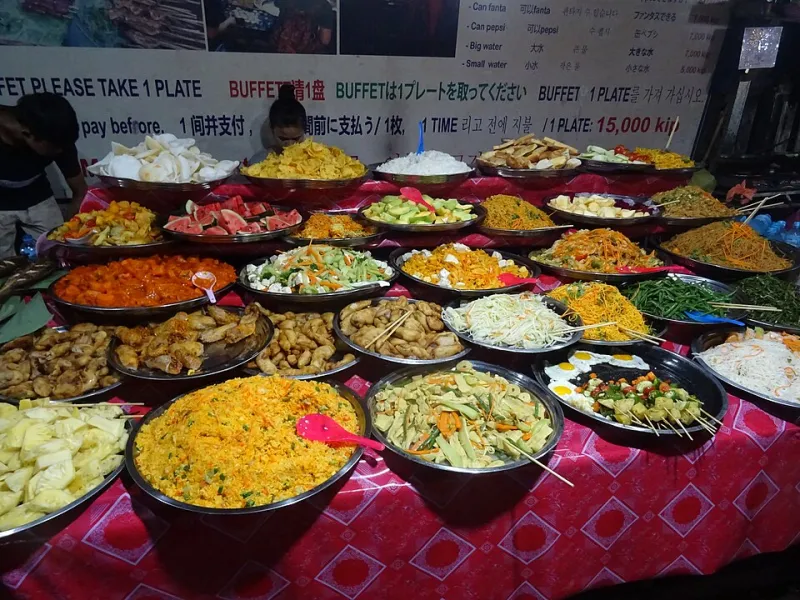
A grocery that caters to a diaspora sells specificity. Not "international cuisine" — a brand. The exact brand of tea, the exact rice with the exact grain length, the frozen leaves, the dried pepper that actually tastes like the one from the market back home. For someone who moved across an ocean, brand loyalty isn't stubbornness. It's a small exercise in continuity.
This is why the mainstreaming of international aisles in American supermarkets lands strangely. On one hand, yes, it's nice that you can buy sambal at a big-box store now. On the other, the international aisle is a fiction — an awkward single row holding seven continents. The immigrant grocery doesn't have an international aisle. The whole store is the aisle.
A Bulletin Board With a Pulse
Look near the exit of many of these shops and there's a corkboard, or a taped-up piece of paper, or a WhatsApp group with 340 members. Job openings, apartments, a seamstress, a driving instructor, someone's cousin selling a crib. Immigration clinics. Health screenings. A notice about a festival.
That's an information network running at the speed of tape and printouts, often for people who don't have another place to ask. The store owner becomes an informal fixer — the person who knows who's hiring, which landlord is honest, and which doctor takes walk-ins.
The Second Generation Behind the Counter
After school, a lot of these stores are staffed by kids. A fourteen-year-old doing homework behind the register, translating for a customer, hopping up to grab something from a high shelf. They know the regulars. The regulars know them.
That's the whole story of these businesses in one image: the first generation builds them, the second generation runs the register, and somewhere in between, a neighborhood learns the family's name.
Where Cultures Cross Without Announcing It
Here's the part nobody writes about: these stores are among the most reliably integrated spaces in America. Purely because they're convenient.
A woman with no connection to Korea buys her scallions at a Korean market because it's two blocks closer. A work crew stops at a Yemeni-run bodega for coffee. Somebody's dad from a suburb gets a recommendation for a good garam masala from a stranger in line, and takes it.
Nobody's running a diversity program. They're buying bananas.
But over years, something happens. You learn a word a week. You know the owner's kids' names. You get handed a piece of something fried on a holiday you don't celebrate, and you eat it in the car. Multiply that by a million storefronts and you have an actual argument about how American belonging gets built — not through big gestures, but through repeated small transactions with the same person.
How to Be a Good Regular
If you want to be useful in return, it's simple. Learn the owner's name and use it. Ask for a recommendation and take it seriously. Don't haggle at the register; the margin is thinner than you think. Pay cash once in a while, because card fees come out of the store's pocket. Don't ask where the English food is. And if somebody tells you the frozen dumplings in the back are the good ones, believe them.
The Rent Is Always Due
None of this is romantic in an economic sense. These stores run on razor-thin margins in buildings whose rents keep climbing, against chains that can absorb a loss to kill a competitor. Every few months, a beloved shop closes and the neighborhood finds out weeks later, when someone knocks on a shuttered gate.
Which makes them worth paying attention to now, while the lights are still on and the radio is still playing from behind the counter.
Love, Sold by the Bag
There's a reason the name of this site is a phrase in Tagalog. Mahal kita — love, in a language where the market is where you meet your neighbors.
And maybe that's what these stores are actually stocked with. Love expressed as logistics. A bag carried to someone's apartment. A tab in a notebook. A hand on the shoulder of a tired regular, asking nothing. A taste from home, bagged up, and handed across a counter to someone who needed it today.
You can't buy that at a chain. You can only walk in, get known, and come back.